Nacho: A Slab Serif That Brings Vintage Flair to Modern Designs
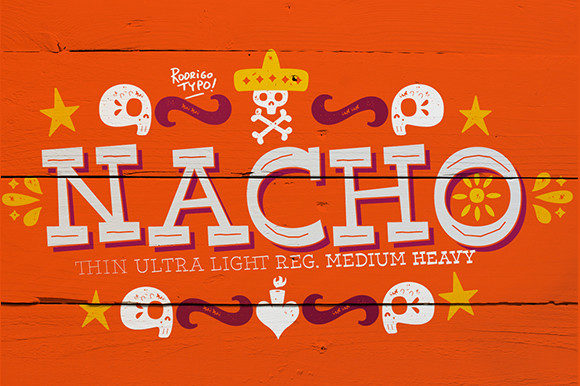
There's a certain energy that jumps off the page when typography does more than just communicate words—it tells a story. That's exactly what you get with Nacho, a slab serif typeface that channels the vibrant spirit of Mexican culture, particularly the festive aesthetics of Día de los Muertos. It's bold, it's playful, and it carries a nostalgic warmth that can transform a flat design into something with genuine personality. If you've been searching for a typeface that feels both vintage and alive, Nacho might be the creative spark your next project needs.
What Makes Nacho Stand Out in a Crowded Font Market
Let's be honest—there are thousands of serif fonts available today, and many of them blur together after a while. Nacho doesn't have that problem. Its slab serif construction gives it a sturdy, confident foundation, but the real magic lies in the details. The letterforms have subtle curves and playful proportions that feel handcrafted rather than machine-stamped. There's a warmth to the characters that makes you think of hand-painted signage, vintage carnival posters, and artisan packaging.
The font draws direct inspiration from Mexican folk art and celebration imagery, which gives it a cultural richness that generic typefaces simply can't replicate. It reads as vintage without feeling dated, fun without being childish, and dynamic without sacrificing legibility. That balance is surprisingly hard to achieve, and it's what makes Nacho a genuinely useful creative tool rather than just a novelty font you'd use once and forget about.
Where This Typeface Really Shines: Real-World Applications
Think about the projects where personality matters most. Branding work for a food truck, a craft brewery, or a boutique taco shop? Nacho practically writes the visual identity for you. Its cultural roots and bold presence make it an obvious choice for anything in the food and beverage space, but its versatility extends well beyond that.
For logo design, Nacho offers the kind of distinctive character that helps a brand stick in people's memories. A slab serif with this much personality can anchor a logo on its own or pair beautifully with a clean sans serif for contrast. Think about how many iconic brands use bold, characterful typography as the backbone of their visual identity—that's the lane Nacho operates in.
Packaging design is another area where this font excels. Whether you're designing labels for artisan hot sauce, craft beer bottles, or specialty coffee bags, Nacho brings that handcrafted, premium feel that consumers respond to. It signals authenticity and care, which matters enormously when someone's scanning a shelf full of competing products.
Social media graphics benefit from typefaces that stop the scroll, and Nacho does exactly that. Its bold slab serif structure reads clearly even at smaller sizes on mobile screens, while its distinctive personality makes posts feel curated rather than generic. Use it for Instagram quote graphics, Pinterest pins, YouTube thumbnails, or Facebook event headers—anywhere you need type that works hard visually.
For web design and blogs, Nacho works beautifully as a headline or accent font. Pair it with a more neutral body font, and you've got an instant visual hierarchy that guides readers through your content. It's particularly effective for lifestyle blogs, food blogs, travel content, and any site that wants to project warmth and creativity.
Print materials haven't lost their relevance, either. Posters, flyers, invitations, menus, business cards, and event programs all benefit from a typeface with this much character. Imagine a Day of the Dead-themed wedding invitation or a community festival poster set in Nacho—the font does half the design work before you've added a single image.
Merchandise designers should pay attention here as well. T-shirts, tote bags, stickers, and hats often rely on bold typography to carry the design. Nacho's slab serif structure prints well across different materials and sizes, and its cultural aesthetic appeals to a broad audience that appreciates artful, meaningful design.
Pairing Nacho with Other Fonts: Practical Tips
One of the most common questions designers have about distinctive display fonts is how to pair them without creating visual chaos. With Nacho, the key is contrast. Because it has so much personality on its own, you'll want to pair it with something more restrained for body text.
A clean sans serif font works wonderfully alongside Nacho. Think about typefaces like Open Sans, Lato, or Montserrat for paragraphs and supporting text. The simplicity of the sans serif lets Nacho's character breathe without competing for attention.
If you prefer a serif font for body copy, go with something contemporary and understated. A transitional serif like Libre Baskerville or a modern serif like Playfair Display can complement Nacho's vintage energy while maintaining readability in longer passages.
For projects that need a handwritten or script font element—maybe a wedding invitation or a social media graphic—be careful not to overload the design with too many expressive typefaces. One bold choice per layout is usually enough. Use Nacho for the headline, a script font sparingly for accents, and a neutral font for everything else.
The best approach is always to test your pairings in context. Set your actual content, not just the alphabet, and view it at the sizes it will actually appear. What looks great in a 72-point headline might need adjustment at 14 points on a website.
Readability, Licensing, and Getting the Most from Your Investment
Any premium font worth purchasing should come with multiple styles and weights, and quality design assets like Nacho typically include variations that give you flexibility. Check what's included in the package—uppercase and lowercase sets, numerals, punctuation, multilingual support, and stylistic alternates all add value and expand your creative options.
Readability is always worth testing before you commit. Display fonts like Nacho are designed primarily for headlines, logos, and short bursts of text rather than long-form reading. Use it where it's meant to be used—large, bold, and prominent—and choose a more conventional typeface for body copy. That division of labor is how professional editorial design and web design work in practice.
Commercial licensing deserves a moment of attention before you start using any font in client work or products for sale. Make sure the license covers your intended use, whether that's digital products, printed merchandise, or client branding projects. Most reputable font licenses are straightforward, but it's worth reading the terms so there are no surprises down the road.
For brand identity work, consistency is everything. Once you choose a typeface like Nacho for a brand, document exactly how it should be used—sizes, colors, spacing, and pairings. That documentation becomes the foundation of a visual system that stays cohesive across every touchpoint, from social media graphics to packaging to website headers.
Ultimately, the best typography choices are the ones that serve the project's goals. If you're building a brand that wants to feel warm, culturally rich, vintage-inspired, and unmistakably fun, Nacho delivers all of that in a single, well-crafted package. It's the kind of creative font that reminds you why typography matters—not just as a functional tool, but as a genuine expression of style and intention.