Roughline: Capturing Authentic Grit in Modern Design
There's a distinct power in designs that refuse to look polished. In an era dominated by sleek, vector-perfect minimalism, there is a growing hunger for typography that feels tactile, raw, and undeniably human. This is where the distinction between standard typesetting and expressive design becomes clear. When you are working on a project that needs to scream personality—whether it’s a craft brewery logo, a heavy metal gig poster, or a vintage-inspired clothing line—you need a font that carries weight. You need a typeface that looks like it has lived a life, bearing the scars of the streets and the authenticity of hand-painted signage. Enter Roughline, a bold display font designed to bridge the gap between digital precision and analog soul.
The Anatomy of a Vintage Grunge Typeface
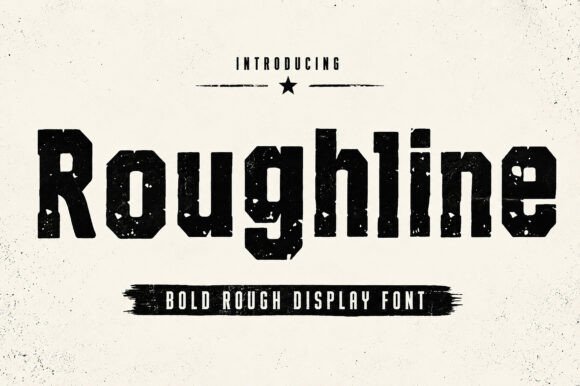
Understanding what makes Roughline effective requires looking at its construction. It isn’t just a standard block letter with a noise filter applied on top. It is a carefully crafted display font built with distressed textures, uneven edges, and robust letterforms. The visual appeal lies in its imperfections. The etched rough texture mimics the look of letterpress printing where the ink didn't quite catch, or the stencil paint that bled slightly on a brick wall. This gives the typeface an incredibly authentic, handcrafted aesthetic that digital fonts often struggle to replicate.
The design philosophy behind this typeface draws heavily from underground street culture, retro prints, and garage-style branding. It captures a specific nostalgia for industrial typography—the kind you might see on old shipping crates, mechanic shop signage, or 1970s concert flyers. However, despite its distressed appearance, the font maintains excellent readability. The robust letterforms ensure that even at a glance, the message is clear. It is a bold display mode typeface, meaning it is engineered to command attention at larger sizes, making it the perfect choice for headers and hero text where visual impact is the primary goal.
Practical Applications: From Streetwear to Digital Marketing
For designers and business owners, the true value of a font lies in its versatility. Roughline is not a one-trick pony; it is a versatile design asset that fits seamlessly into a variety of creative contexts. If you are working in the apparel industry, this font is a natural fit. Streetwear branding relies heavily on attitude, and the craggy, audacious nature of Roughline communicates rebellion and cool without saying a word. It works equally well for direct-to-garment printing, where the texture of the font can add depth to t-shirt graphics, hoodies, and hats.
Beyond clothing, consider the impact on physical products. Packaging design is a competitive field where shelf appeal is everything. Imagine a hot sauce label, a coffee bag, or a craft beer bottle utilizing this typeface. The vintage grunge feel instantly communicates a "small-batch," artisanal quality. It suggests that the product inside is made with care, not churned out by a factory. Similarly, for garage and workshop insignia, the industrial roots of the font provide an immediate sense of durability and strength.
In the digital realm, the applications are just as potent. Social media is crowded with content, and standing out in a scrolling feed requires bold visuals. Using Roughline for Instagram graphics, YouTube thumbnails, or event headers can stop the scroll. It brings a high-energy vibe to music promotions, album wraps, and merchandise designs. Even for bloggers and content creators, using a display font like this for section headers or "hero images" can break up the monotony of standard web fonts and inject personality into the reader's experience.
Strategic Typography and Brand Identity
Choosing a font is rarely just about aesthetics; it is a strategic decision that shapes brand recognition. Typography is a silent ambassador for your brand. When a customer sees a serif font, they might think tradition and luxury. When they see a geometric sans-serif, they think modern and tech-forward. When they see Roughline, they think bold, authentic, and edgy. If your brand identity relies on a connection to urban culture, retro nostalgia, or a "do-it-yourself" ethos, this typeface aligns perfectly with those values.
One of the most significant challenges in design is maintaining visual consistency across different platforms. A brand might look great on a website but fall apart on a printed flyer or a social media post. Because Roughline is built for both print and digital environments, it allows for a cohesive look. You can use the same impactful typeface for your website headers, your email marketing campaigns, and your physical business cards without losing the texture or the mood.
However, a word of advice on readability and hierarchy: display fonts are meant to be the loud voice in the room, not the whisper. Because of the distressed texture and bold weight, Roughline is best used for short bursts of text—headlines, logos, slogans, and call-to-actions. Avoid using it for long paragraphs of body copy, as the texture can become visually fatiguing over large blocks of text. Instead, pair it with a clean, legible sans-serif font or a simple serif for the body text. This contrast allows the display font to shine while ensuring your message remains easy to read.
Integrating Roughline into Your Workflow
For those looking to implement this style, the workflow is designed to be straightforward. The font includes uppercase characters, numerals, and punctuation, giving you the full toolkit needed for standard design work. The "easy operation" mentioned in its design isn't just marketing speak; it refers to the fact that the texture is baked into the vector paths. You don't need to be a Photoshop expert to use it—simply type out your words, and the gritty aesthetic is there.
When testing font pairings, look for balance. Since Roughline has a heavy visual weight and a complex texture, it pairs well with lighter, simpler typefaces. Think of a thin, modern sans-serif or a classic, clean serif font. This creates a visual hierarchy that guides the viewer's eye naturally from the headline to the content. For example, a wedding invitation with a "Rustic" or "Barn" theme could use Roughline for the couple's names to give that hand-hewn look, paired with a delicate script for the details to maintain elegance.
Finally, always consider the licensing and usage rights of your design assets. If you are creating work for a client, a commercial project, or merchandise for sale, ensure you have the appropriate license for the font. Professional typography is an investment in the quality of your work. By incorporating a high-quality, premium font like Roughline, you are elevating your project from a generic template to a custom piece of visual communication. It is about giving your design a voice that is as loud and unique as the message you want to convey.